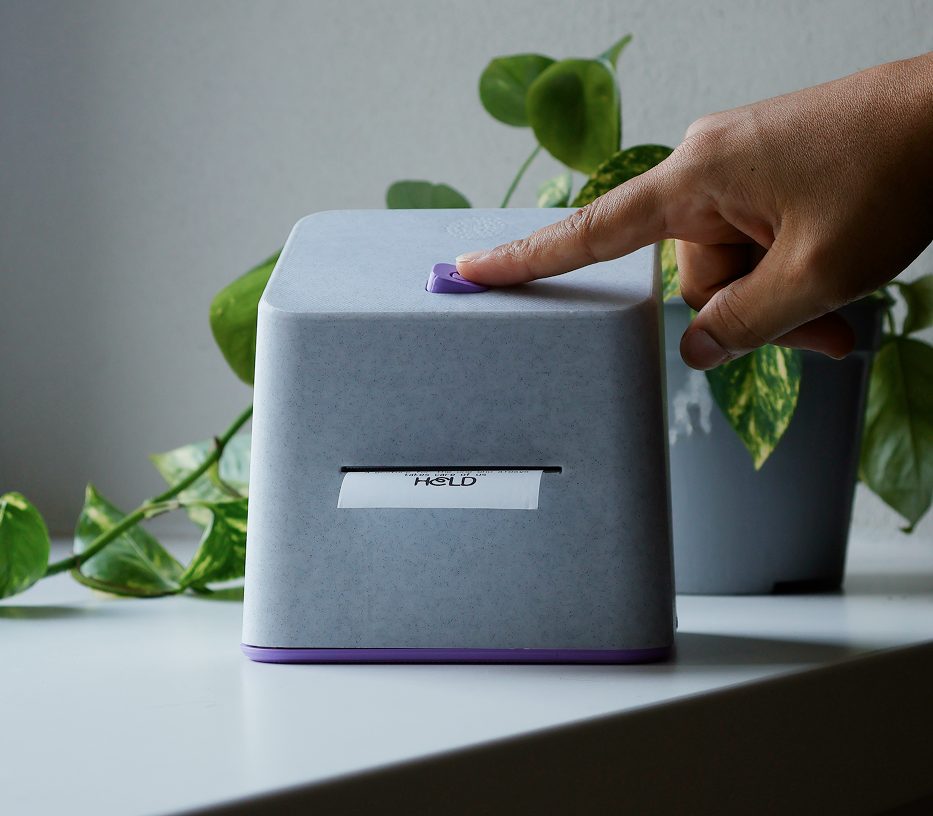

A hand pressing the button on top of the HELD device, next to a plant
HELD

HELD is a device that brings people together through care. Placed in a shared space at home, it creates a ritual around something often invisible: caring for the person who cares for everyone else.

The challenge

"People don't understand the level of responsibility, frustration and stress caregiving generates."

That's what Lisbeth, from Costa Rica, told me as she shared how, from one day to the next, she went from being a sister to becoming a mother figure and the full-time caregiver of her brother with Down syndrome.

Her story is far from unique. In Latin America, women spend between 6 and 30 more hours per week than men on care work, most of it unpaid and undervalued. Many carry a double shift, combining caregiving with full-time jobs, while others care in isolation at home with no income at all. It is one of the clearest expressions of gender inequality in the region.

Knowing this, one question stayed with me:
Who is taking care of the caregivers?

How might we build a support circle around a caregiving woman, so that caring becomes shared, visible work?
HELD

Role: Lead Designer: research, concept, prototyping and testing
Duration: 8 weeks
Context: Final thesis project, Interaction Design Programme, Copenhagen Institute of Interaction Design (CIID), 2026
Advisors: Fabio Sergio · Sara Salsinha
Methods: Design research · Co-design · Wizard-of-Oz testing · Product design

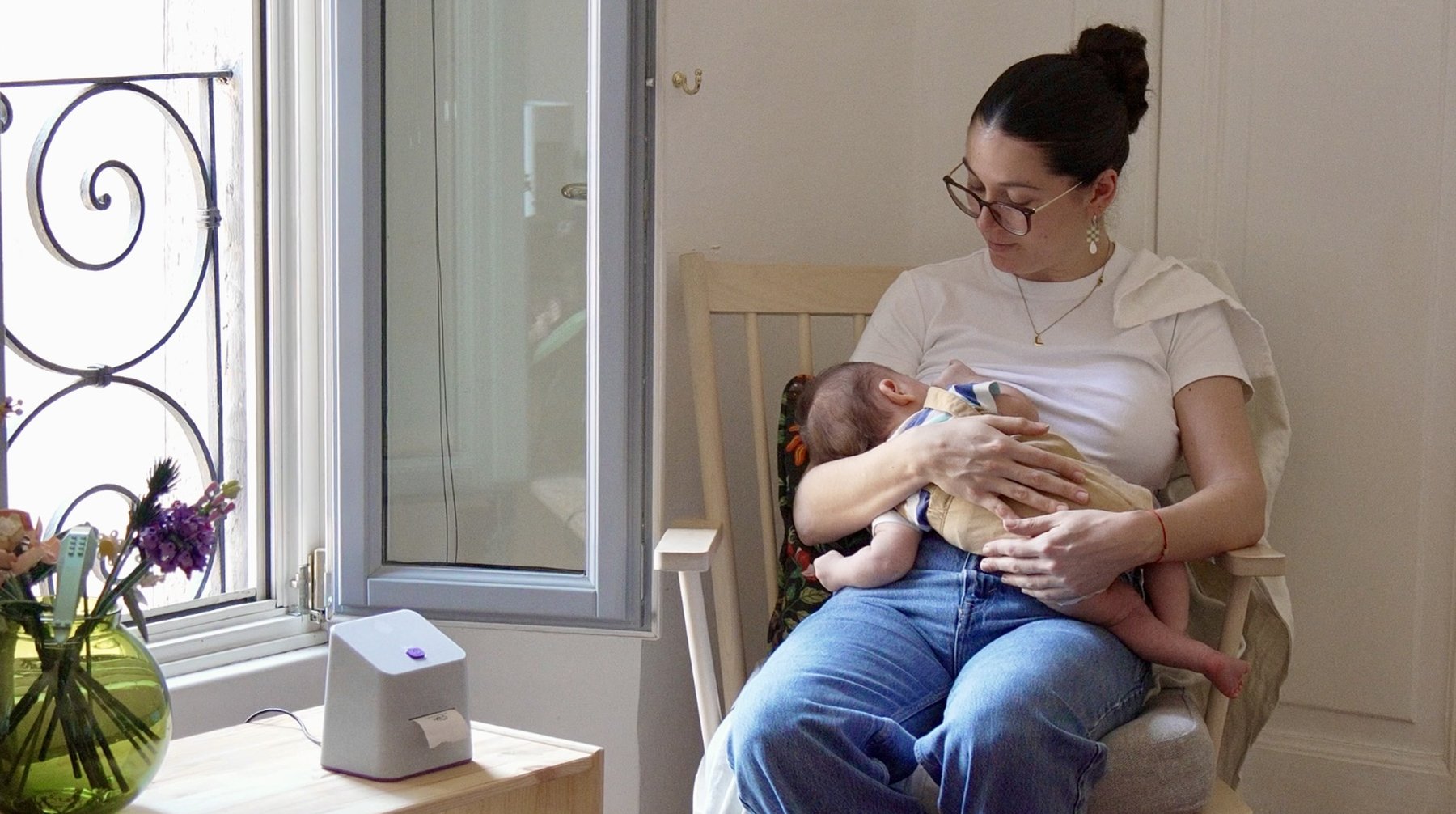
HELD is a device that brings people together through care. Placed in a shared space at home, it creates a ritual around something often invisible: caring for the person who cares for everyone else.

Drawing on a curated knowledge base, HELD turns five core needs (affection, freedom, identity, leisure and participation) into simple, meaningful gestures. A household member presses a button and receives a printed note with a small action designed to make the caregiver feel seen and supported. Over time, the system becomes personal: the caregiver can share preferences through the app or by voice, and HELD translates them into actions others can take.

By making care easier to express and take part in, HELD helps households build a lasting habit of caring for one another, and makes the absence of care visible when no one shows up.

The HELD project film

The process

  1. Kick off
  2. Desk research (with interviews)
  3. Ideation & co-creation
  4. Low fidelity prototypes (prototyping model with AI)
  5. User testing
  6. High fidelity prototyping
  7. Documenting

01 · Discover

Desk research and initial interviews, followed by in-depth interviews with caregivers, experts and fathers to identify design opportunities.

02 · Define

Synthesized insights and ran co-design sessions with caregivers to validate what they truly needed.

03 · Ideate & prototype

Brainstorming sessions led to low-fidelity prototypes of the concept.

04 · Test

Two rounds of Wizard-of-Oz testing with real families over a week.

05 · Build & tell

Programmed the functional prototype, 3D-modeled and printed the device, and brought the concept to life through a storyboard and film.

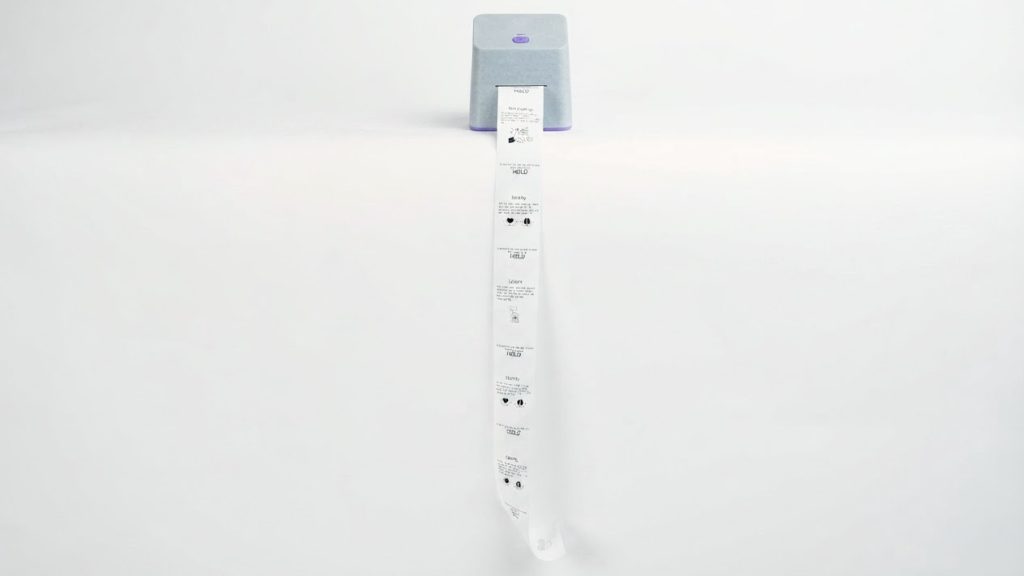
The HELD device printing a long strip of notes

Research

Research wasn't a single phase. It continued throughout the project, shaping every decision from the first interviews to the final tests. In total, I listened to 32 stories from:

  • Primary caregivers: mothers, daughters and partners who carry the daily load
  • Secondary caregivers: fathers and partners who share part of the care, including a father in Denmark with equitable parental leave, a first-time father and a separated father
  • Experts: specialists from the United Nations Population Fund (UNFPA), the United Nations Children's Fund (UNICEF) and Costa Rica's Joint Institute for Social Aid (IMAS), working on care, childhood and social policy.

Key insights

1. It is difficult for caregivers to switch between thinking of someone else and thinking about themselves, making it difficult to connect with their reality and needs.

2. Caring is a job that can't be replaced by just anyone because it is rooted in love and compassion.

3. In the hardest moments of daily care, affection and words of affirmation work as a reset, reminding the caregiver that their work is not invisible.

Provocatype: the magic button

To go beyond what caregivers could put into words, I used a provocation:

"Imagine you're in one of the most stressful moments of your day as a caregiver, and you have a magic button. What would you want it to do?"

"My husband to be present."
"Bring my mom back."
"To increase my support circle."

None of the answers were about solving a task. They were all about people: someone to show up, someone missing, someone to share the load.

That magic button became the starting point for HELD.

Test the experience

Wizard-of-Oz prototype

Before building the device, I tested the experience itself. For a week, I became HELD: I sent gestures by WhatsApp to real couples, just as the device would print them at home.

This let me test the core question without technology getting in the way: would families actually carry out the gestures, and would they matter?

Two rounds · Real households · One week each

What I learned

  • Ritual adoption. Both families wanted to keep going after the test ended. The behavior had become meaningful on its own.
  • Intention over origin. Knowing a gesture was suggested by the system didn't reduce its value. What mattered was doing it with real intention.
  • It helps both sides. HELD also supports people who want to care but don't know how, giving them a place to start.

From couple to family. The concept grew from couples to the whole household: mothers, fathers and even older children can take a note and join the ritual.

"It really worked for me, a lot. It led us to talk about a lot of things, and I feel like, as a couple and as a family, it helped us a lot."
— Emilio, dad of an 8-month-old

Prototyping

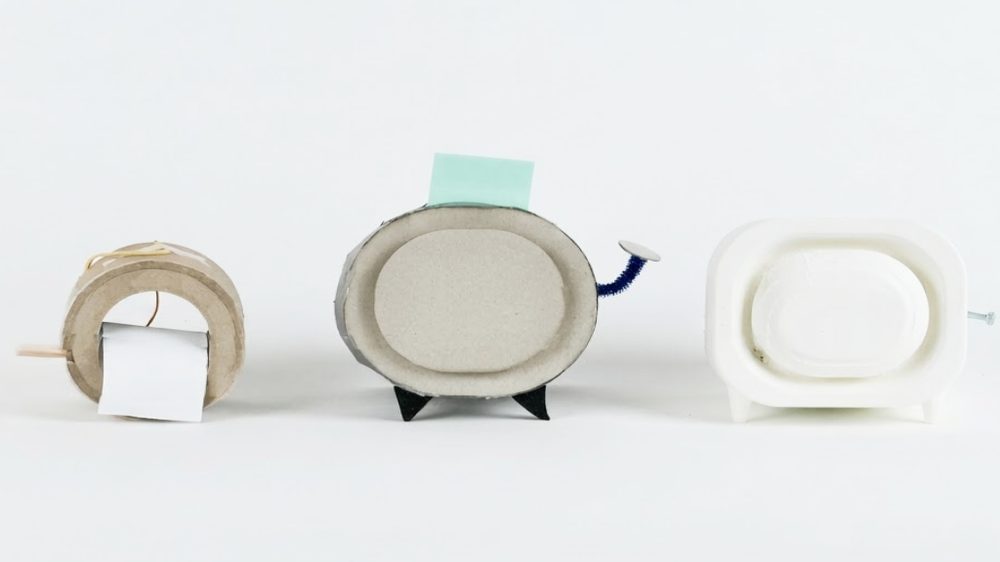
Early form factor prototypes in cardboard, wood and white plastic

The prototyping question for the form factor exploration was: which form factor places attention on the gestures of care?

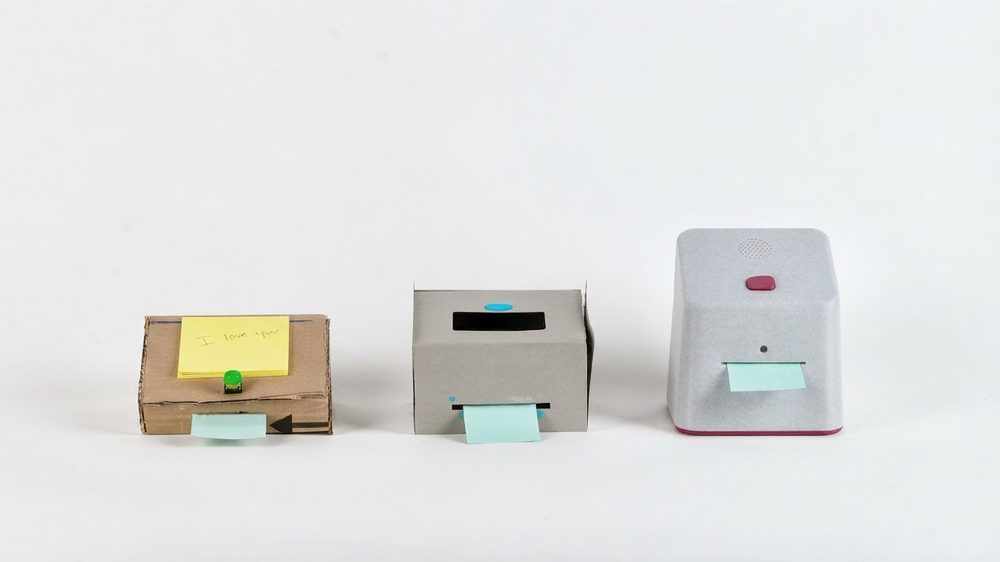
Three box-shaped prototypes, from cardboard to the final grey device

Digital Prototype

AI allowed me to prototype quickly. Long before there was a physical object, I could show caregivers the experience, gather their feedback and keep developing the concept.

I asked more than 20 caregivers: "What is one gesture you would like your support circle to do for you?" Their answers became a repository of care gestures. That repository worked as a database the AI drew on to generate new tasks, and I curated it throughout the process.

The digital prototype made the concept easy to explain and experience. Caregivers could try it, add their preferences and help refine how each task was translated and personalized to the context of each household.

How can caregivers get out of survival mode?

I asked myself: what is the opposite of surviving? Is it dignity? Is it simply being? So I researched the human needs we all share and connected them with the interviews and qualitative data.

Key needs

Based on the insights and secondary research, including Max-Neef's Human Scale Development framework, I decided that gestures of care should respond to five essential human needs for caregivers:

Affection
To be seen, touched and told she matters, without having to ask.

Participation
To be truly listened to, and to know that caring for those she loves is something everyone shares, not something she carries alone.

Freedom
A moment where nothing depends on her, where she's free to just be, not needed by anyone.

Identity
Her past, present and future self, all seen and valued beyond the role of caring.

Leisure
Time to imagine, daydream or simply relax, not because it's productive, but just for the joy of it.

Illustrations of the five needs: affection, freedom, identity, leisure and participation

Context

Carework is important because...

When exhaustion becomes a source of pride, something is wrong. Care shapes our society at every level:

  • For children: it's their right to grow up and develop in a safe, nurturing space.
  • For women: it's the chance to have their own needs met, to move beyond survival mode and live as whole human beings.
  • For society: it's the need to recognize care work for what it is: difficult, rewarding and essential.

"Living tired is my superpower."
— Elizabeth, mother of a 13-year-old

"You feel alone even when you are surrounded by people."
— Fernanda, mom of a 2-year-old

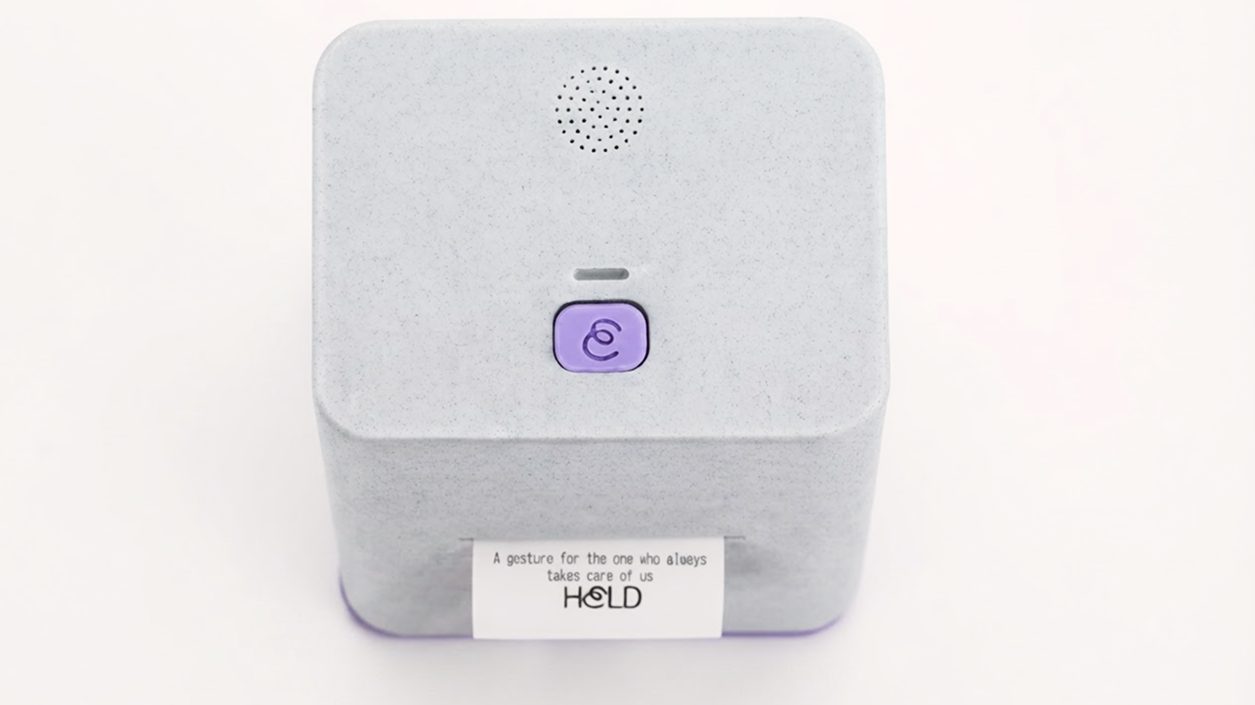
Top view of HELD with its button and a printed note reading 'A gesture for the one who always takes care of us'

Main interactions

Input: Button
Output: Printed note
Input: Voice
Output: Light and sound
Input: Idle time
Output: Automatic print