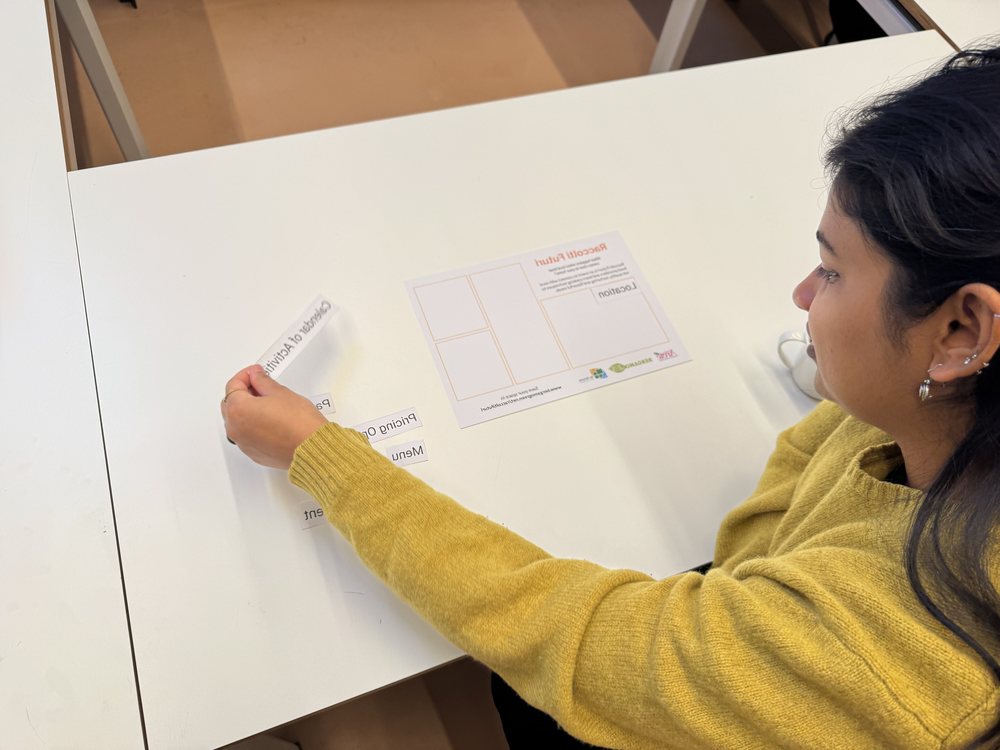
A participant filling in a card about where they buy their food

Buon Vicino

"Good neighbour" in Italian is a social experience that reconnects Bergamo's citizens with the food culture around them, turning urban gardens into neighbourhood hubs.

The challenge

The way we consume food has a real environmental cost. Much of what fills our supermarket shelves travels long distances, imported from other countries or other regions, adding to carbon emissions and disconnecting us from the land around us. Changing these everyday patterns is one of the most direct ways each of us can contribute to tackling climate change.

Bergamo has the ingredients to do things differently: a strong commitment to regenerative agriculture and a rich variety of fresh, local products. Yet grocery stores remain the convenient default, and food cooperatives, a strong local alternative, are still out of reach for many residents.

How might we build a community where food is more local?
The process

01 · Discover

22 people · 4 types of spaces observed · 2 weeks

In two weeks, we combined four research methods to understand Bergamo's local food system.

In-depth interviews

7 interviews with 3 experts, 3 consumers and 1 local producer.

Field observation

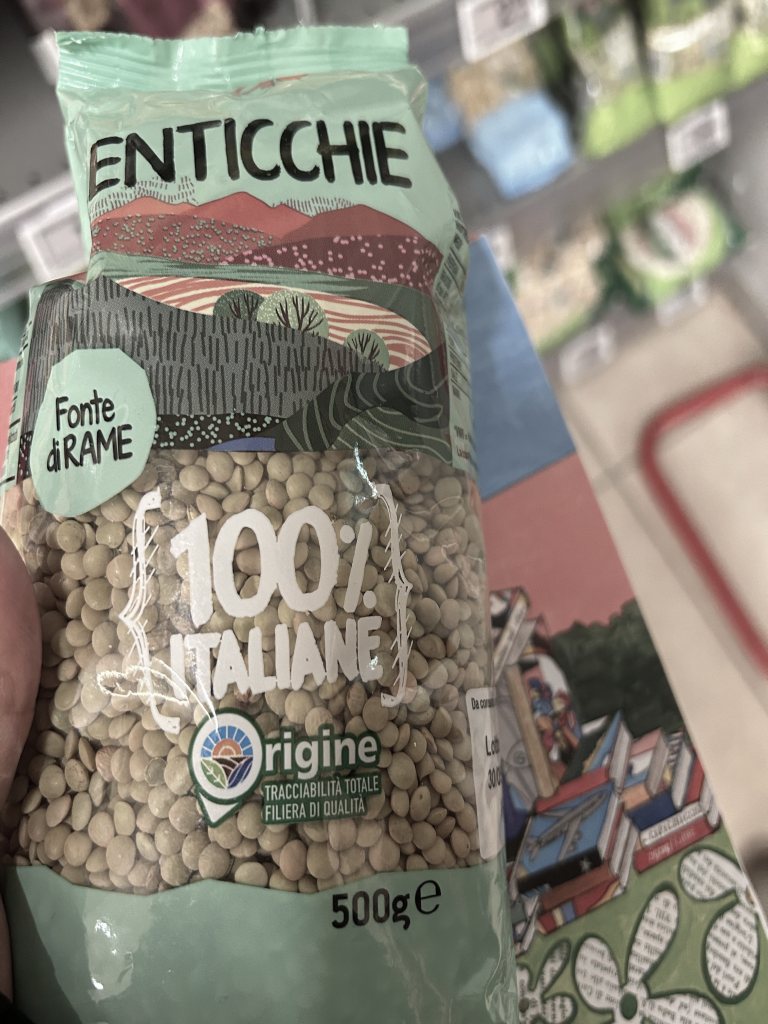
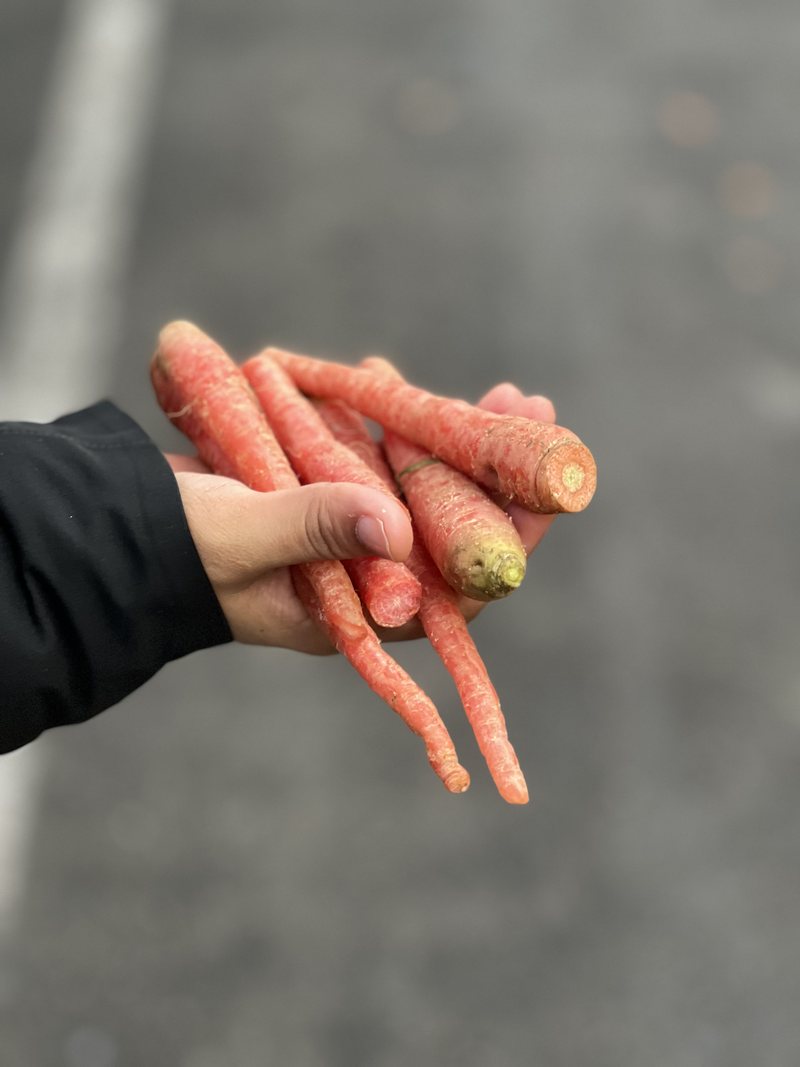
We visited food markets, farmers' markets, public urban gardens and supermarkets to see how people shop, and whether they could tell which products were local and which weren't.

Street interventions

We approached around 15 people in public spaces with a short, five-minute activity: a small card asking where they buy each type of food (fruit, vegetables, bread, meat and so on). Once they filled it in, we asked them why, opening a conversation about how they perceive local food and what shapes their choices.

Pantry study and journey mapping

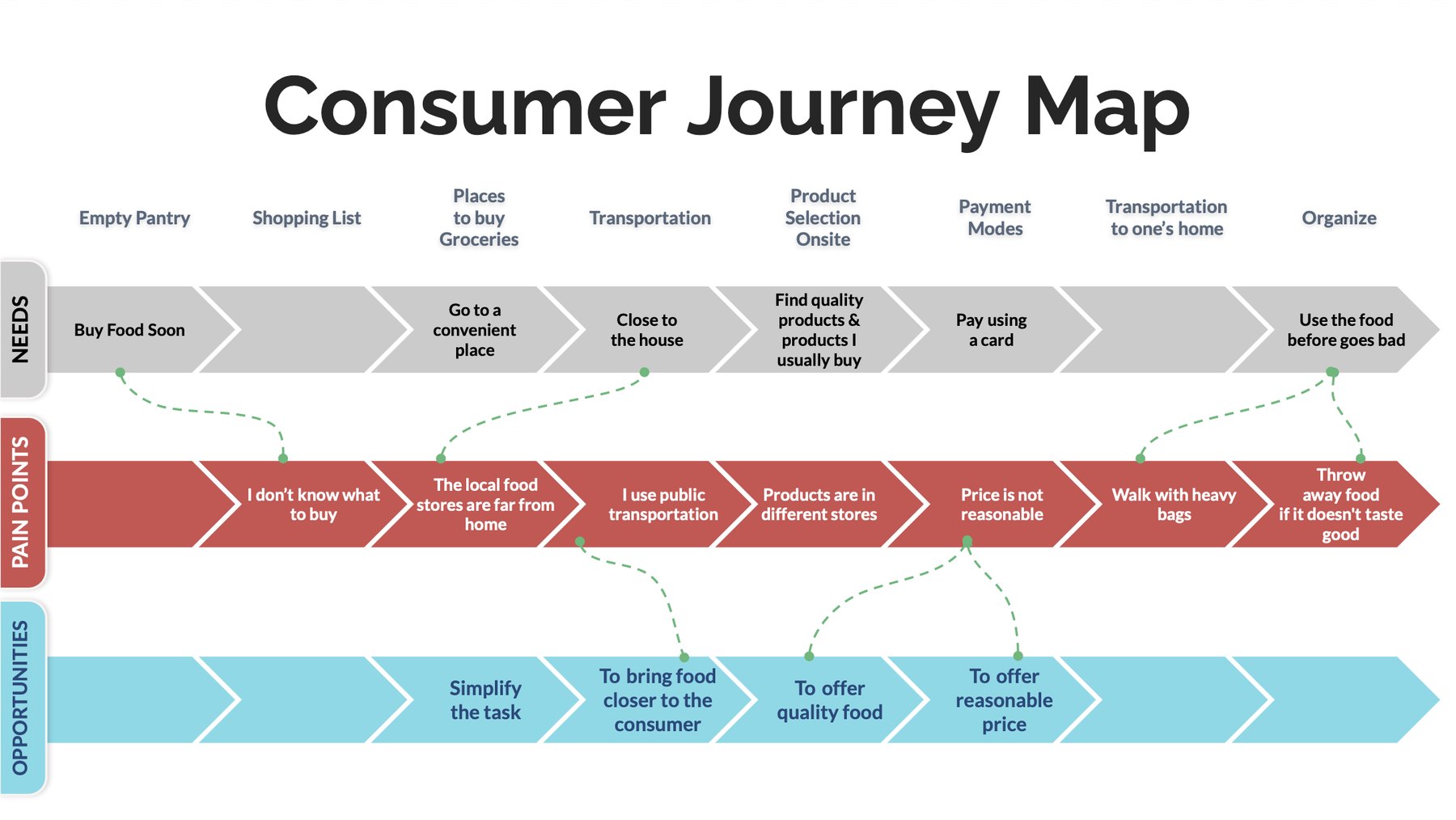
We looked inside consumers' pantries to understand what they buy, then mapped the journey of how and where they get it. Tracing this journey helped us spot the moments where an intervention could bring people closer to local food.

Consumer journey map showing needs, pain points and opportunities from an empty pantry to organizing food at home

What we observed

  • Farmers' markets are the most direct way to buy local, but they turned out to be inconvenient for most people. They were either built for bulk buying or infrequent, with little variety.
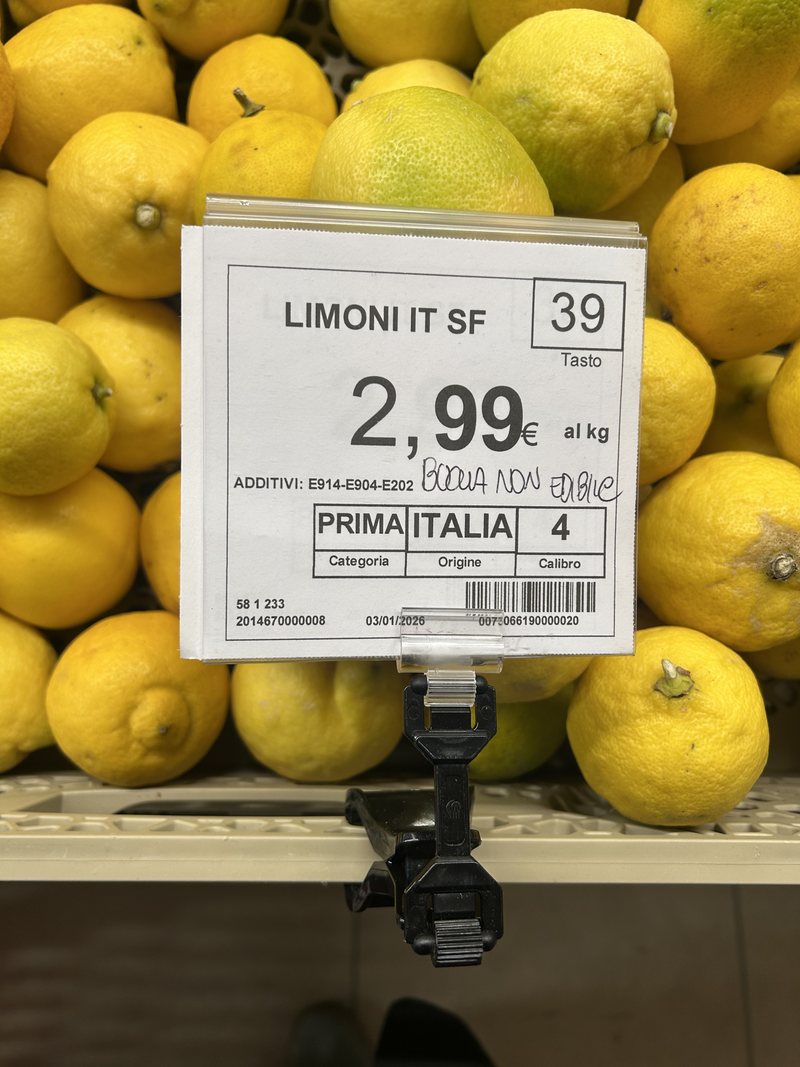
  • Supermarkets clearly label products as Italian, but fresh produce rarely comes from the region. Much of it is imported from other countries or brought in from other parts of Italy. "Italian" doesn't mean local, and shoppers have no easy way to tell the difference.
  • Local food was either hard to reach or hard to recognise.
Bulk bags of lentils at a market A hand holding a bunch of carrots Lemons in a supermarket with an 'Italian' price label

02 · Define

Key insights

1. The loss of everyday contact with local food has made it feel out of reach, reinforcing the belief that it is exclusive for a few people.

"The slogan 'organic food is the new luxury', does not help with the coop's cause of social accessibility and affordability to all" — Massimo, expert and cooperative leader

2. Relationships between people and their food has broken down, jeopardizing the preservation of the local culture identity.

"New generations cook less, relying on fast food and delivery." — Daniel, producer

"Food is related to Nostalgia of my childhood, plus traditional and unique food" — David, consumer

3. People are motivated to buy local when they know the story of the product.

"Buying local allows people to know who is behind the product, build trust, and receive honest advice about seasonality and quality." — Gabriela, expert

How might we turn local food into a shared, everyday experience that brings neighbours together?

"Italians are divided on many things, but united around the table."
— Director, Botanic Garden of Bergamo

03 · Ideate & Test

Crazy 8s
We used Crazy 8s, sketching eight ideas in eight minutes, to quickly explore a wide range of possible interventions across the opportunity areas we had identified.

Testing two directions
We then held a testing session with users and presented two contrasting concepts:

  • Concept A: Convenience. A delivery service focused on making local food easier to get, building on the convenience opportunity.
  • Concept B: Community. A neighbourhood-based network where local food is shared, giving it a deeper social meaning.
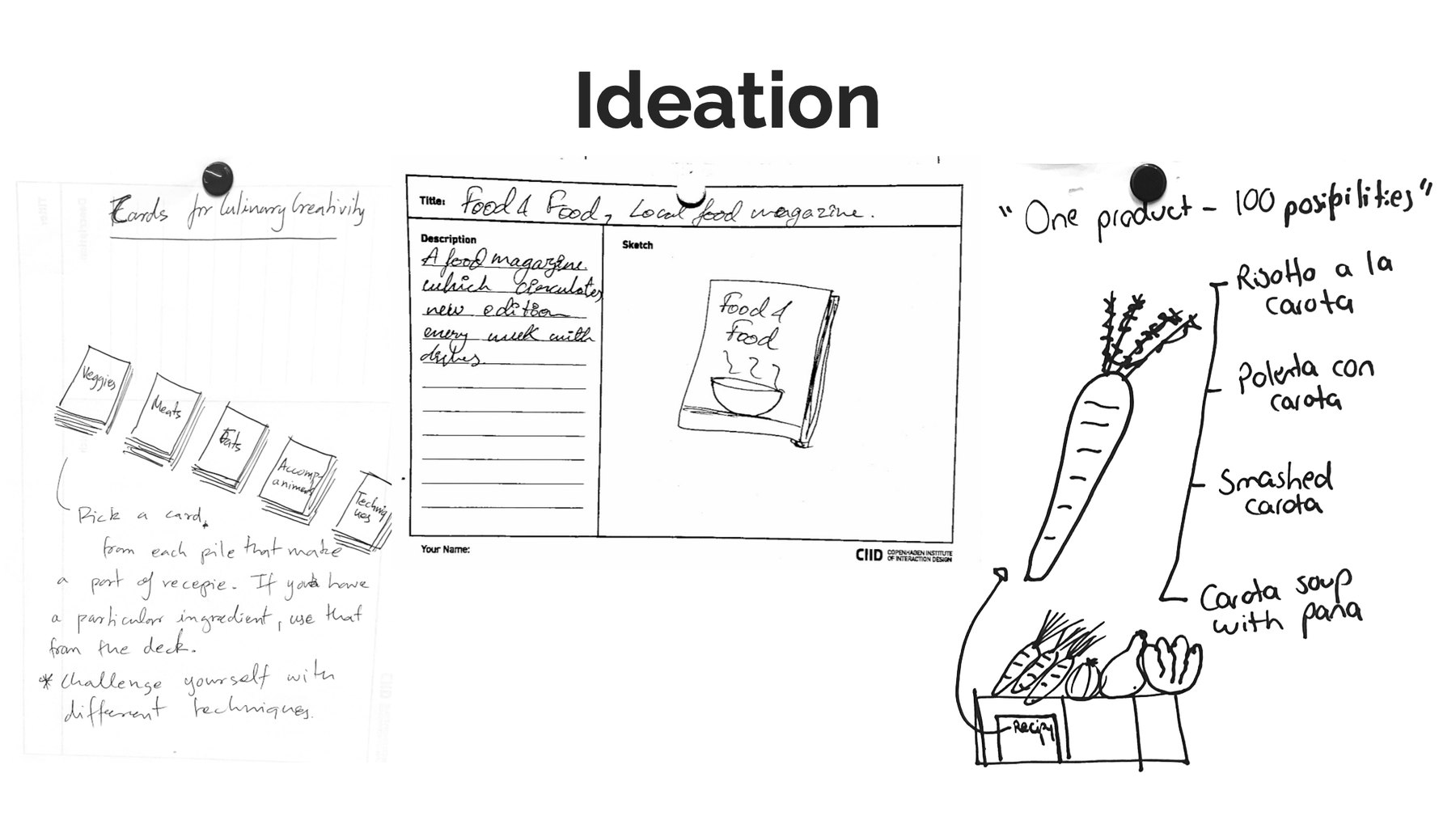
Ideation sketches: cards for culinary creativity, a local food magazine and 'one product, 100 possibilities'

Buon Vicino

Role: Design Researcher
Team: Daniela Gómez · Diana Chaves
Duration: 2 weeks
Context: Life-Centred Research course, Interaction Design Programme, CIID, 2025/26
Outcome: Concept proposal
Methods: In-depth interviews · Field observation · Street interventions · Pantry study · Journey mapping · Crazy 8s · Concept testing

Concept

Buon Vicino is a concept that proposes turning urban gardens into community hubs, bringing together local government, the food cooperative Aretè, farmers and volunteers.

It reimagines the home-delivery basket: instead of arriving at your door, your weekly share is picked up at a nearby urban garden, turning a transaction into an encounter. Unlike farmers' markets, it offers a weekly, household-sized share, close to home.

How it works

Pick up: collect your weekly basket of seasonal produce at your neighbourhood garden.

Taste: surplus seasonal produce is used for on-site tastings, live cooking demos and recipe sharing.

Grow: gardening activities help participants connect more closely with the land.

Belong: the power of we. Gathering around food builds belonging, ecological awareness and a stronger local economy.

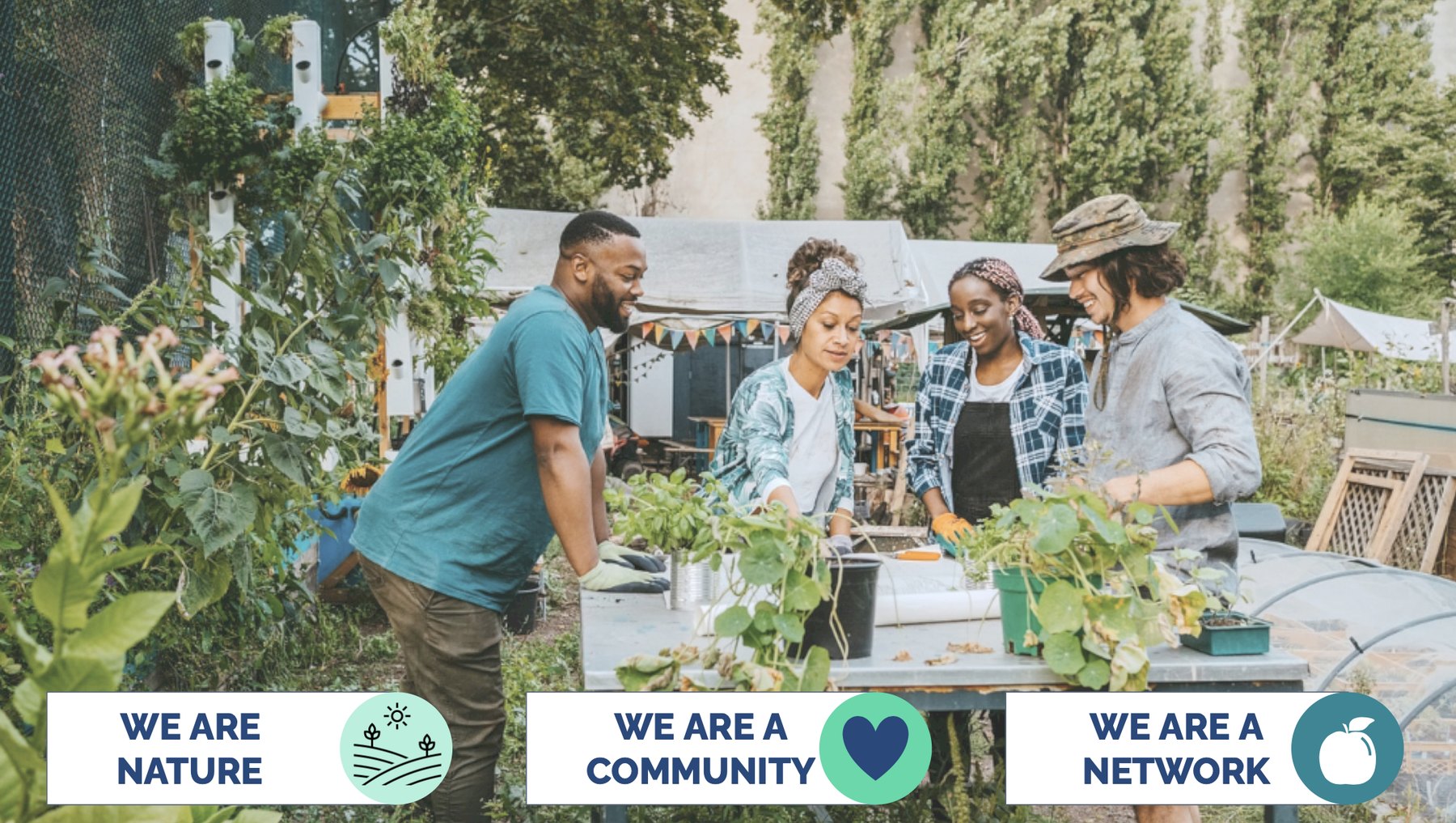
Buon Vicino: neighbours gathering at an urban garden hub

Partner: Cooperative Aretè

Aretè is one of the key connectors of local food in Bergamo. The cooperative works mostly with local products and reaches people through several channels, including a physical shop and home delivery.

Yet our research showed that even with organisations like Aretè in the city, most people still buy their food at supermarkets, where local products are hard to find.

That made Aretè a strategic partner for the project. The opportunity wasn't to build something new from scratch, but to take the cooperative's existing capacity and bring it closer to people through what actually motivates them: a connection to the product, and a connection to the community through food.

Ecosystem Map

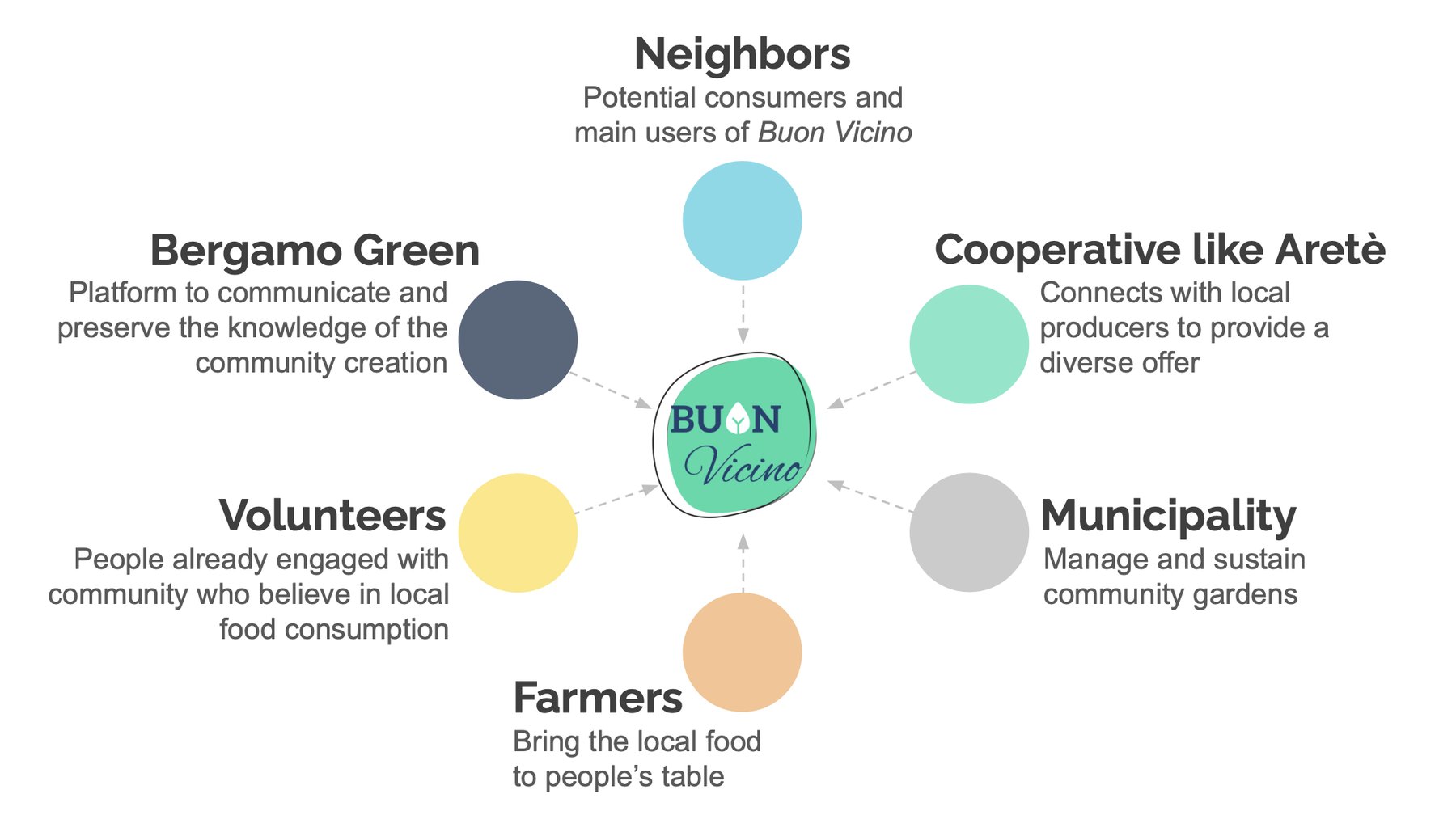
Buon Vicino ecosystem: neighbours, cooperatives like Aretè, municipality, farmers, volunteers and Bergamo Green
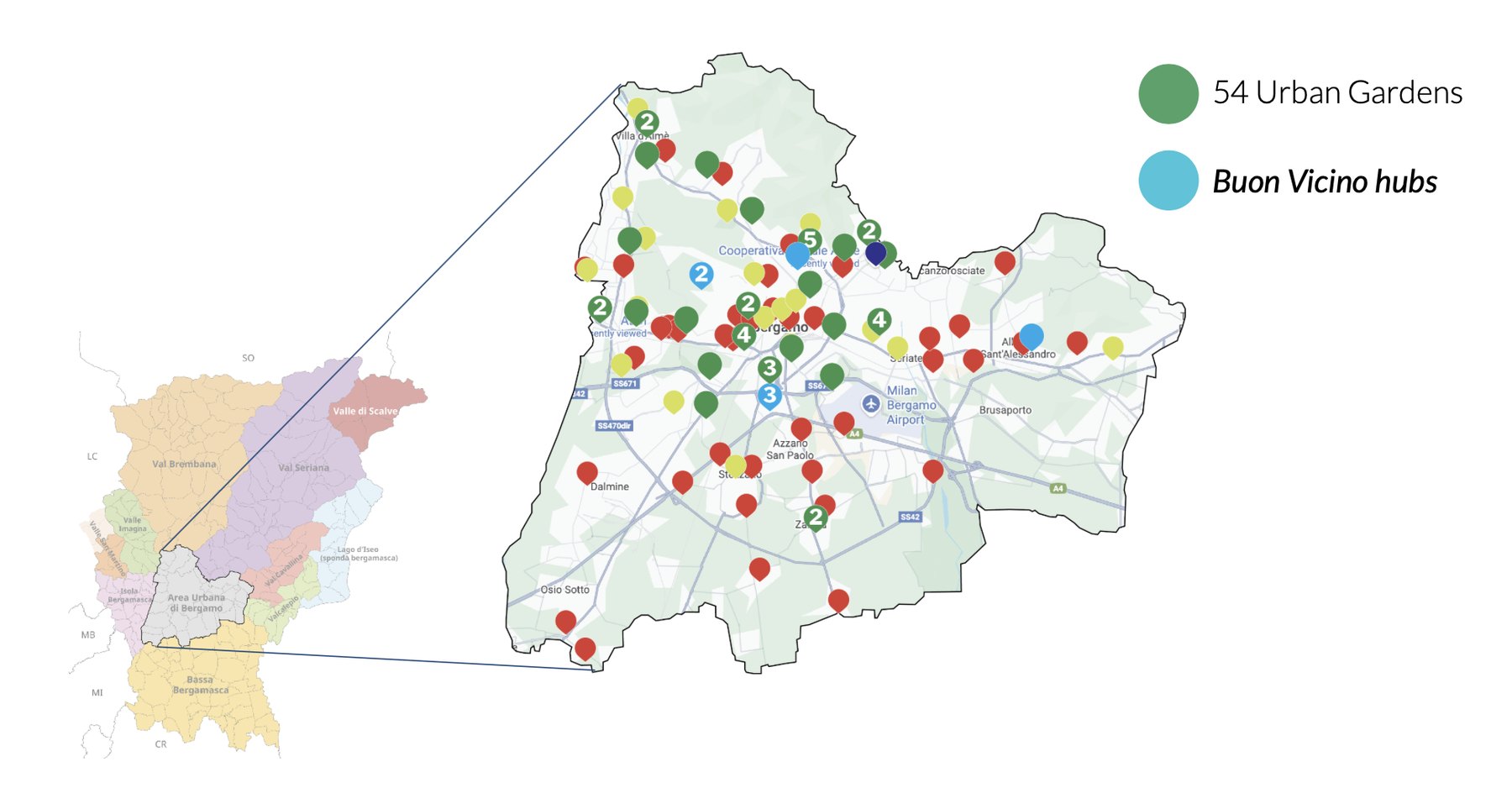
Map of Bergamo showing 54 urban gardens and proposed Buon Vicino hubs

My role

In a team of two, Diana and I shared every stage of the project: planning the research, conducting interviews and observation, running street interventions, synthesising insights and testing concepts.

I brought a systems perspective from my background in public policy and economic development, which helped us see Aretè's existing capacity as a lever and frame the concept as a partnership between the cooperative, local government and the community.

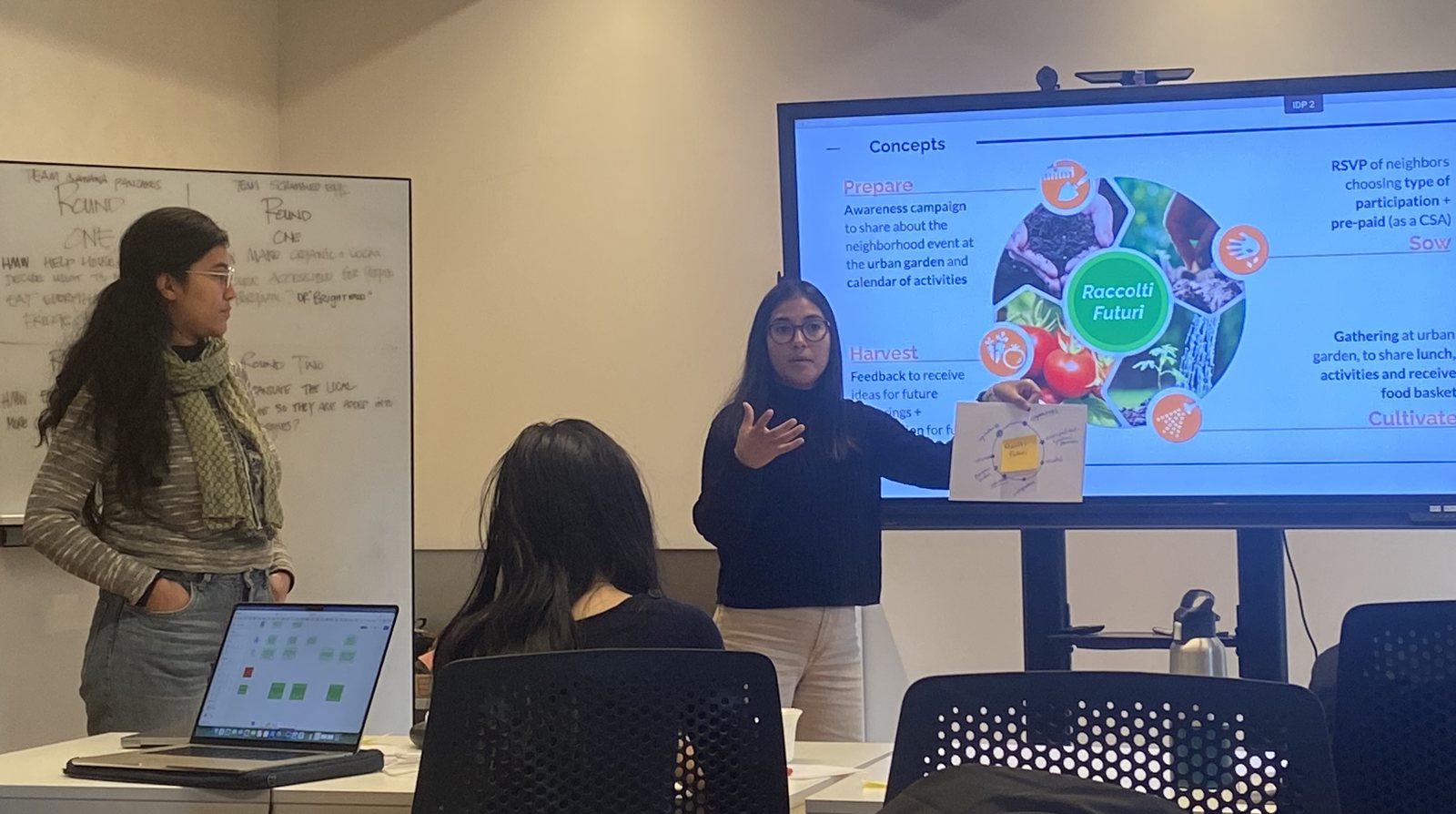
Concept testing session with users